E-Commerce-OBIC
SRS
Software Requirements Specification (SRS) for E-Commerce Marketplace
1. Introduction
1.1 Purpose
The purpose of this document is to describe the requirements for developing an E-Commerce Marketplace tailored for Micro, Small, and Medium Enterprises (MSMEs). The system will enable vendors to set up stores, manage inventory, and sell products. Customers can browse products, add them to their cart, and pay via various payment methods including loans. The platform will support both B2C and B2B models and include features such as subscription services, delivery integration, and customer feedback mechanisms.
1.2 Scope
The e-commerce marketplace will support a wide range of functionalities:
E-store management for vendors and providers
Wholesale and retail options
Subscription services for SaaS, media streaming, and other models
Online shopping and secure payment options, including Buy Via Loan
Delivery services integration
Customer account management, feedback, and support
Reporting and analytics for vendors and administrators
Mobile and web application support
1.3 Definitions, Acronyms, and Abbreviations
SaaS: Software as a Service
B2C: Business to Consumer
B2B: Business to Business
CRM: Customer Relationship Management
e-KYC: Electronic Know Your Customer
API: Application Programming Interface
2. System Overview
The system will consist of several interconnected modules:
Marketplace Control Panel for administrative management.
Vendor E-Store for product listing and management.
Customer Shopping Module for browsing, shopping, and checkout.
Loan and Payment Module for processing payments via different methods.
Delivery Module integrated with third-party services for product dispatch.
Subscription Services for recurring models like SaaS and media streaming.
Analytics and Reporting Dashboard for administrators and vendors.
3. Functional Requirements
3.1 User Roles
Super Admin: Manages all aspects of the platform including users, stores, accounts, finance, and analytics.
Store Manager: Manages the e-store, including inventory, promotions, sub-stores, and orders.
Customer: Browses and purchases products, manages orders, and provides feedback.
3.2 E-Store Management (Vendors)
Create & Manage Stores: Vendors can create and manage their own online stores.
Product Management:
Add, edit, and categorize products.
Define prices, sizes, and descriptions.
Manage inventory and set stock levels.
Promotions & Discounts: Ability to add discounts, run flash sales, and offer wholesale pricing.
Store Customization: Vendors can customize their store’s identity (logo, colors, layout).
Sub-Stores: Vendors can create sub-stores under the main store for better product categorization.
3.3 Customer Shopping & Checkout
Browse Products: Customers can browse products by category, search by keyword, and view detailed product information (description, price, reviews).
Shopping Cart: Customers can add products to the cart, review items, and proceed to checkout.
Buy Via Loan: Option to pay for products via loan during the checkout process. Integration with loan providers will allow customers to apply and receive instant approval for loans.
Secure Payments:
Pay via credit/debit cards, e-wallets, or other integrated payment methods.
Customers can opt for recurring billing (subscriptions) or one-time payments.
Order Management: Customers can view order history, track shipping status, and manage returns or refunds.
3.4 Subscription Services
SaaS Subscriptions:
Provide subscription-based access to software services.
Offer tiered pricing plans (e.g., Basic, Pro, Enterprise).
Automatic billing and payment renewal.
Media Streaming:
Provide access to content like music, movies, or courses based on a subscription.
Multi-device support with offline access for some content.
Other Subscription Models:
Subscription boxes (physical products delivered on a regular basis).
E-learning platforms and digital content.
3.5 Delivery Integration
Delivery Service Integration:
Upon purchase, the system will communicate with delivery providers based on customer location and vendor store location.
Support for real-time tracking of orders and delivery status.
Address Management: Customers can save and manage multiple shipping addresses.
3.6 e-KYC for Account Creation
Electronic KYC:
Customers can provide required documents and information online to create an account in local e-wallets.
Real-time verification and approval process integrated with e-wallet providers.
3.7 Analytics & Reporting Dashboard
Sales Analytics:
Store managers can view sales data, order trends, customer demographics, and product performance.
Admin Reports: Admins can generate reports on platform performance, revenue, user activity, and system health.
Customizable Widgets: Both vendors and admins can customize the dashboard with specific data views.
3.8 Customer Feedback Mechanism
Ratings and Reviews: Customers can rate and review products, vendors, and delivery services.
Messaging and Support:
In-platform messaging between customers and vendors for inquiries or support.
Vendor-customer messaging for order updates, queries, and troubleshooting.
4. Non-Functional Requirements
4.1 Performance
Scalability: The platform must support a large number of simultaneous users (customers, vendors, admins) and concurrent transactions.
Availability: 99.9% uptime is required to ensure that the platform is always accessible to users.
4.2 Security
Data Protection: Ensure that customer and vendor data are secured through encryption (SSL/TLS) and two-factor authentication.
Payment Security: Secure payment gateway integration, compliant with PCI-DSS standards.
Fraud Detection: Implement fraud detection algorithms for both payments and user behavior.
4.3 Usability
Cross-Platform: The system must be accessible via web and mobile applications (iOS and Android).
Responsive Design: The user interface should adjust seamlessly across different screen sizes.
4.4 Compliance
GDPR Compliance: Ensure that the platform meets data protection regulations for users in applicable regions.
Financial Regulations: Adhere to local financial regulations regarding online payments, lending (Buy Via Loan), and e-wallet integration.
5. Assumptions & Constraints
The platform will be hosted on a cloud service (AWS, Azure, etc.).
The loan service providers are external parties with pre-established APIs.
Third-party delivery services will be integrated via APIs.
The subscription services are customizable depending on vendor needs.
6. Appendices
6.1 References
Example platforms: Amazon, Alibaba, Etsy.
Compliance standards: GDPR, PCI-DSS.
BRD
Business Requirements Document (BRD) for E-Commerce Marketplace
1. Executive Summary
This document outlines the business requirements for developing an E-Commerce Marketplace tailored to Micro, Small, and Medium Enterprises (MSMEs). The goal is to create a platform that allows vendors to set up e-stores, manage products, and sell both to individual customers and businesses. The platform will also provide consumers with a seamless shopping experience, offering flexible payment methods, including loans, as well as delivery services and subscription models.
Key Objectives:
Empower MSMEs by providing them with tools to sell products online.
Create a user-friendly interface for both vendors and customers.
Integrate diverse payment and delivery options to enhance convenience.
Provide advanced reporting and analytics for business decision-making.
Ensure security and scalability to handle growing market demand.
2. Business Goals
2.1 Primary Goals
Support MSMEs: The platform aims to assist local businesses in establishing an online presence by enabling them to set up and manage e-stores.
Increase Sales & Reach: Provide vendors with the ability to reach a broader audience, both locally and globally, through online channels.
Customer Convenience: Allow customers to browse products, shop via various payment methods, including loans, and have goods delivered directly to their homes or businesses.
Enhance User Engagement: Leverage customer feedback mechanisms such as ratings and reviews to improve customer satisfaction and product offerings.
Monetization: Implement subscription services (SaaS, media streaming, etc.) and transactional models to generate revenue.
2.2 Secondary Goals
Streamline Operations: Provide tools for inventory management, order processing, and delivery tracking to increase efficiency for vendors.
Data-Driven Insights: Offer advanced analytics and reporting for vendors and administrators to optimize business strategies.
Trust & Security: Implement robust security measures to ensure safe transactions and protect customer and vendor data.
3. Business Requirements
3.1 Vendor Features:
E-Store Setup: Vendors can create and manage their online store with ease, customize their store’s identity, and set up product categories.
Inventory & Product Management:
Vendors can add, edit, and manage product listings, including stock levels and pricing.
Support for product categorization, wholesale/retail pricing, and inventory alerts.
Sales & Promotions:
Vendors can set up flash sales, discounts, and promotions to drive more sales.
Ability to offer both wholesale and retail pricing.
Analytics Dashboard: Vendors can access real-time analytics on sales performance, customer behavior, and stock management.
Multi-Channel Selling: Vendors can sell via both web and mobile channels.
3.2 Customer Features
Account Creation & Management:
Customers can create accounts, manage profiles, view order history, and track orders.
Customers can also manage payment methods and shipping addresses.
Product Browsing & Shopping:
Customers can search products, browse categories, and view product details including reviews and ratings.
Add products to the cart and checkout through various payment options.
Flexible Payment Methods:
Customers can choose between various payment options, including Buy Via Loan and digital wallets.
Subscription Services:
Customers can subscribe to SaaS products, media streaming, and other services.
Automatic billing for recurring subscription models.
Delivery Options:
Integrated delivery service allows customers to choose a delivery provider based on location and preferences.
Real-time delivery tracking.
3.3 Marketplace Control Features
User Management: The platform’s super admin can manage user roles, vendors, store approvals, and customer support requests.
Financial Management:
Manage platform revenue, vendor payouts, and transactional fees.
Generate financial reports for tracking platform performance.
Reporting & Analytics:
Comprehensive dashboards with customizable reporting on user activity, sales, financial metrics, and system performance.
Security & Compliance:
Ensure platform security through features such as SSL encryption, two-factor authentication, and fraud detection systems.
Compliance with legal standards such as GDPR and PCI-DSS, COPPA.
4. Business Process Overview
4.1 Vendor Process Flow
Registration: Vendors register on the platform and create an e-store.
Product Listing: Vendors upload products, set categories, prices, and stock levels.
Sales & Promotions: Vendors set up promotions and sell products.
Order Fulfillment: Vendors receive orders, prepare them, and coordinate delivery.
Analytics & Reporting: Vendors use reports to optimize inventory, pricing, and marketing strategies.
4.2 Customer Process Flow
Account Creation: Customers sign up and create an account.
Product Browsing: Customers browse the catalog, search for items, and add products to the cart.
Checkout: Customers choose from multiple payment options, including Buy Via Loan or digital wallets.
Order Fulfillment: Customers receive real-time updates on delivery status.
Review & Feedback: Customers can leave ratings and reviews after purchase.
4.3 Payment & Delivery Flow
Checkout Process: Customers place an order and select a payment method.
Loan Processing: If the Buy Via Loan option is selected, the platform communicates with loan providers for real-time approval.
Payment Confirmation: Upon payment completion, the vendor prepares the order.
Delivery Coordination: The platform connects with third-party delivery services to fulfill the order.
Tracking & Delivery: Customers receive real-time tracking updates until the product is delivered.
5. Assumptions and Constraints
5.1 Assumptions
Vendors and customers will be using both mobile and web platforms.
The platform will integrate with external delivery services via APIs.
Secure and compliant payment processing is required for both local and international transactions.
Subscription services will include media streaming, SaaS, and recurring service models.
5.2 Constraints
The platform must be scalable to handle a growing user base.
Compliance with GDPR, PCI-DSS, and local financial regulations is required.
API integration with third-party delivery and loan providers must adhere to their security and operational standards.
6. Stakeholders
6.1 Primary Stakeholders
Vendors/Store Managers: Individuals or businesses using the platform to sell their products.
Customers: Consumers purchasing products from the platform.
Super Admin: The administrative team managing the platform’s overall operation and system health.
6.2 Secondary Stakeholders
Loan Providers: External financial institutions providing loans to customers via the platform.
Delivery Services: Third-party logistics partners responsible for delivering products.
7. Key Performance Indicators (KPIs)
7.1 Business KPIs
Vendor Registration Growth: Measure the growth in the number of vendors registering on the platform.
Customer Retention Rate: Track the percentage of customers who continue shopping on the platform.
Sales Conversion Rate: Measure the percentage of visitors who complete a purchase.
Average Order Value: Track the average amount spent by customers in each transaction.
7.2 Operational KPIs
System Uptime: Ensure 99.9% uptime of the platform.
Order Fulfillment Time: Measure the time taken to process and fulfill customer orders.
Customer Satisfaction Score: Collect feedback from customers to assess their experience with the platform.
8. Risks and Mitigation
8.1 Potential Risks
System Downtime: Risk of platform outages affecting sales and customer experience.
Fraudulent Transactions: Potential for payment fraud, especially in Buy Via Loan.
Logistics Failures: Delivery delays or issues with third-party providers.
8.2 Mitigation Strategies
Redundant Servers: Implement redundancy to ensure system reliability and uptime.
Fraud Detection Systems: Deploy fraud detection algorithms and 2FA for secure transactions.
Multi-provider Logistics: Work with multiple delivery services to reduce reliance on a single provider.
9. Appendix
9.1 References
Comparable platforms: Amazon, Alibaba, Etsy.
Compliance guidelines: GDPR, PCI-DSS.
User Stories
1. As a super Admin I want to be able to carry out a new store so that I will be the only user can create a new store.
2. As a super Admin I want to be able to create a new or all attributes for all products so that I give the stores Admin the power to choose attribute for product not creating them.
3. As a super Admin I want to be able to create Store managers (store manager, Employee) So that I can able to grand permissions to each one.
4. As a super Admin I want to be able to grant roles and privileges to employee So that he can able do his job.
5. As A user I want to register in the E-market so that I can use all benefits of E-market.
6. As A user I want to login to E-market so that I can use all benefits of E-market.
7. As A user I want to create my profile so that I can browse it later.
8. As A user I want to create my address book so that I order to many addresses and get the item during delivery.
9. As A user I want to manage my account so that I can change password, email, phone no ...etc.
10. As A user I want to browse my coupons so that I can use them and know expired ones.
11. As A user I want to browse my points so that I can use it and know earned, used, expired.
12. As A user I want to browse my wallet so that I can know the balance of its and.
13. As A user I want to browse my gift cards so that I can browse the balance by using the card no and pin.
14. As A user I want to browse my orders and their status (unpaid, processing, shipped, review, return) so that I follow my orders.
15. As A user I want to create my Wishlist and browse it so that I can order later.
16. As A user I want to save my recently views so that I can order later.
17. As A user I want to follow any store so that I can get some offers.
18. As A user I want to create conversations with customer service so that I can get help or order new items.
19. As A user I want to create dispute cases so that I can get help in some cases.
20. As A user I want to get affiliate link from specified item so that I get commission when sales done.
21. As A user I want to browse all policies of market so that I can get my rights .
22. As A user I want to sign out of my account manually or automatically after minutes so that I my account will be secured.
23. As A user I want to subscribe to OBIC Club with monthly or annual price so that I will get some benefits like discount or coupons.
24. As A user I want to promote to the market in OBIC VIP phases so that I can get some benefits like discounts and coupons.
25. As A user I want to browse any category subcategories, items of the market so that I can buy.
26. As A user I want to browse the item and know all features and descriptions of it (size, colour, prices. etc) so that I can order.
27. As A user I want to browse all sale items so that I can get discount.
28. As A user I want to my body measures so that I the proper offer and items.
29. As A user I want to add my preferences so that I the proper offer and items.
30. As A user I want to add my payment options so that I can choose one of them during shopping (order).
31. As A user I want to add my favourites so that I can come back to it later.
32. As A Employee I want to make live video and link it to the proper item so that I can promote the item and get and get commission.
33. As A store manager I want to appoint delivery man so that I the delivery man can browse his tasks.
34. As A store manager I want to fill my store with items which are linked to category and subcategory so that I can browse all items in my store.
35. As A store manager I want to appoint delivery man so that I the delivery man can browse his tasks.
36. As A store manager I want to choose the descriptions of the item so that the item will be browsed with its descriptions.
37. As A store manager I want to add body measures and item measures for specified item so that customer can browse item with its measures.
38. As A store manager I want to add suppliers so that I can make purchase order in future.
39. As A store manager I want to add company so that I can add stores to this comapny.
40. As A store manager I want to select the units and currency for item so that customer can browse the item with currency and units.
41. As A store manager I want to add inventory items so that I balance of store increases.
42. As A store manager I want to get the balance of the store so that I manage the store.
43. As A store manager I want to get notifications for the item with reorder level so that I can make purchase order.
44. As an employee I want to browse my employee profile so that I know my information and my level.
45. As an employee I want to browse my tasks so that I do it.
46. As an employee I want to browse training courses I got or training available so that I order some training courses in futures.
47. As an employee I want to browse my salary with additions and deductions so that I can know my salary and I can make revise with HR.
48. As an accountant I want to add (COA) charts of accounts so that I can organize all accounts in my company.
49. As an accountant I want to make invoice for any customer so that I can send it to customer to pay.
50. As an accountant I want to make reports on financial situation so that I review or make decisions.
51. As an accountant I want to enter the daily transactions or browse them so that I audit them.
52. As a delivery man I want to get notifications on order to deliver so that I make delivery in the proper time.
53. As a delivery man I want to have the ability to change status of delivery state so that the system synchronizes a new state.
54. As a delivery man I want to have the ability to change tracking state of item so that the customer can track the item by tracking no.
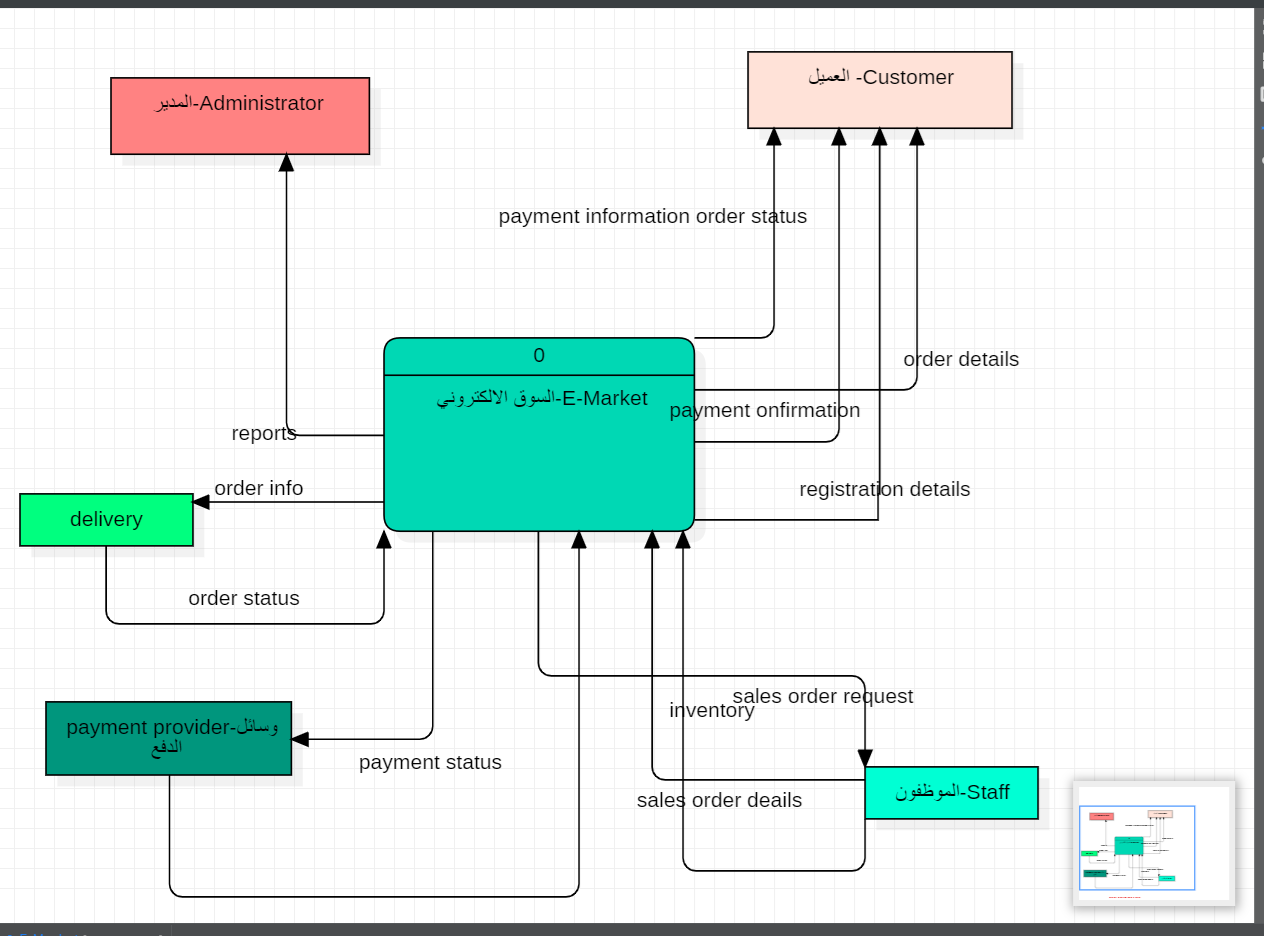
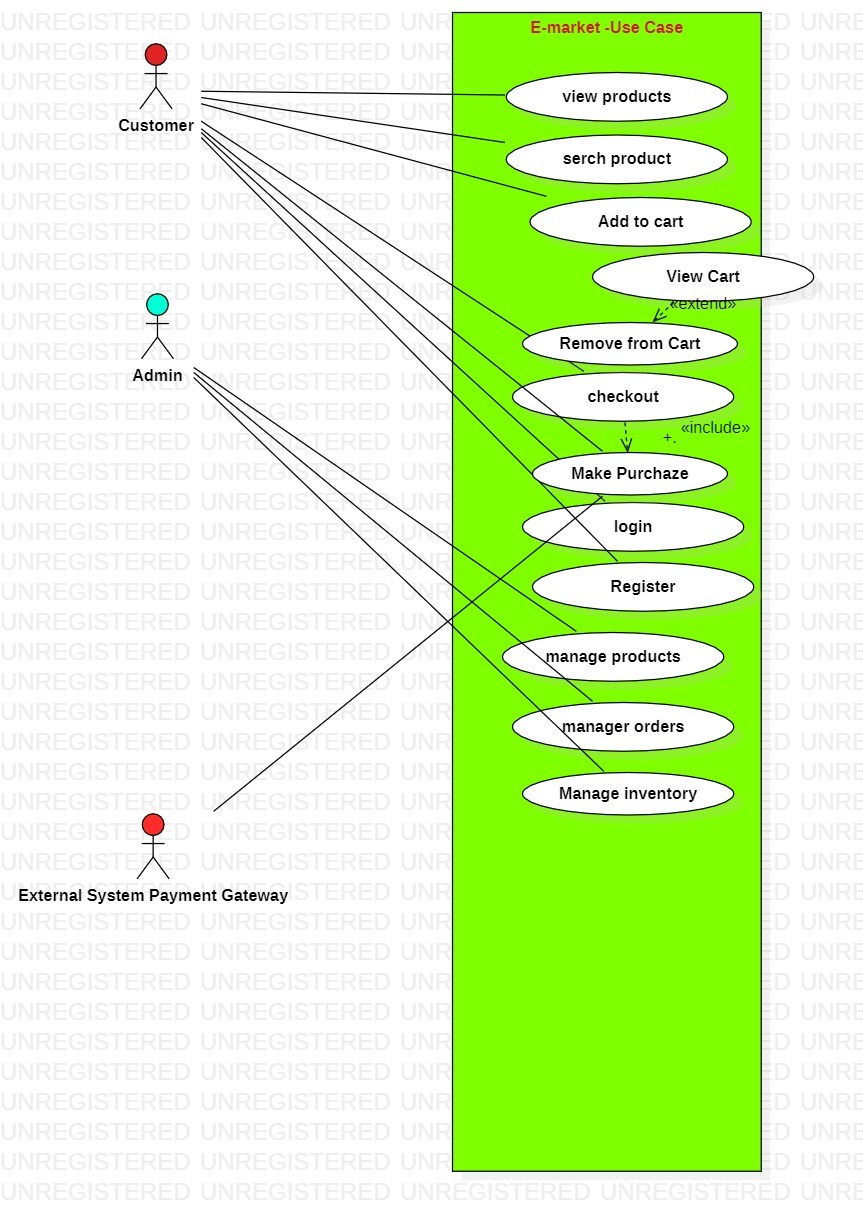
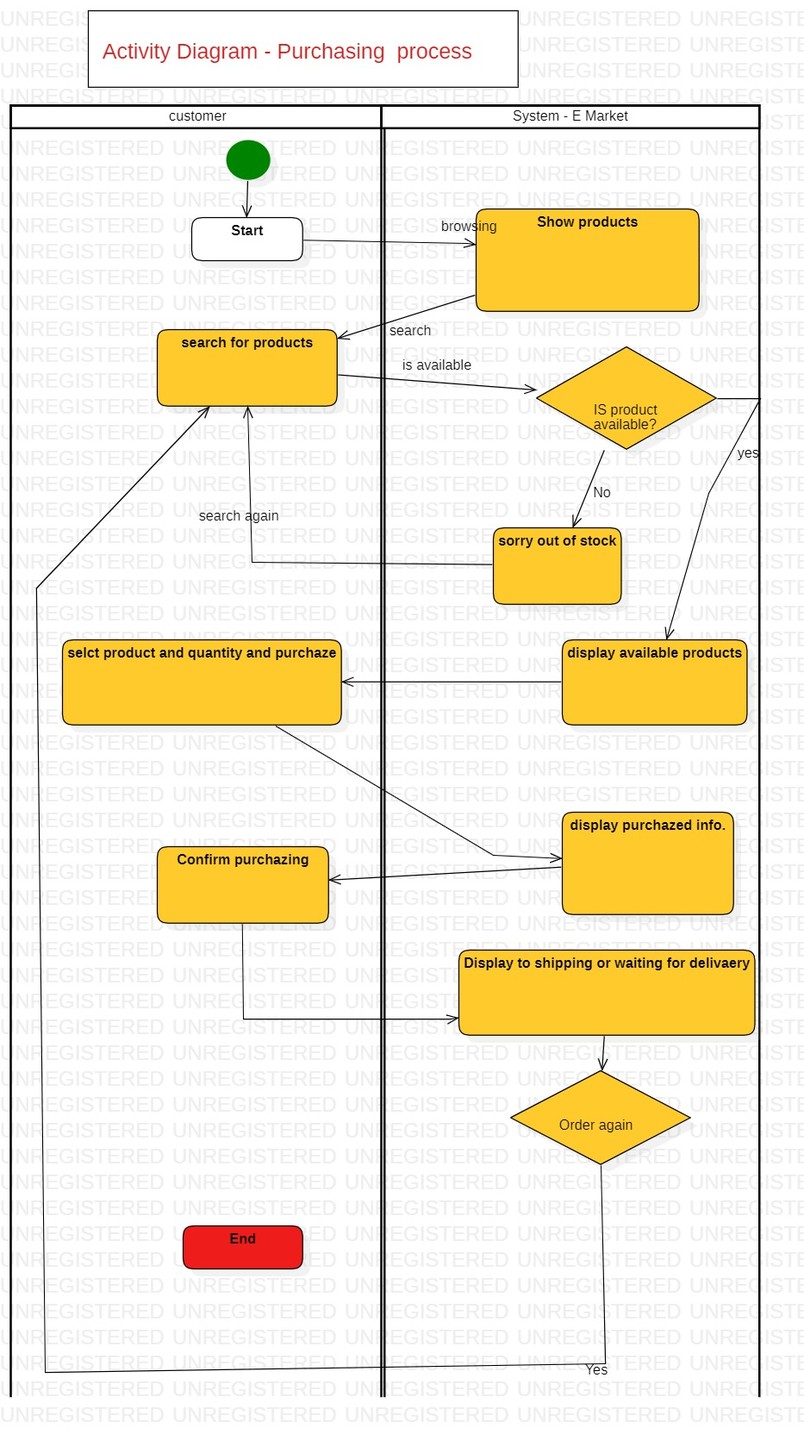
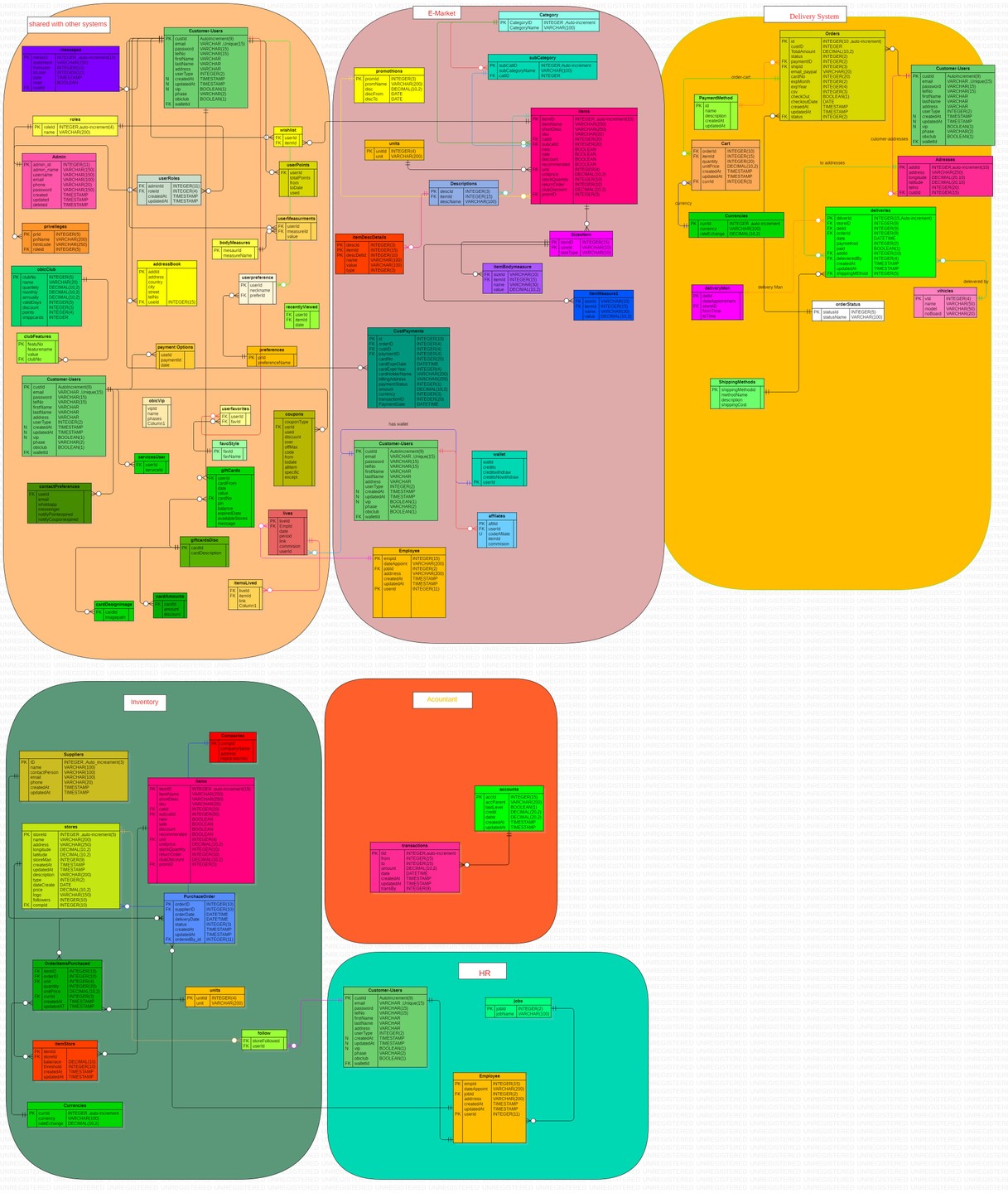
UML Diagrams